

Want to know the recipe for a successful AI product? No problem. I'll tell you. There are only three ingredients.
1. Deep AI expertise. Duh.
But I'm not talking about knowing what an MD file is, repeating the latest AI news, or always knowing what's happening in the AI world. I'm talking about actual experience building complicated AI products that are then integrated into even more sophisticated systems.
For that, you also need deep software engineering expertise because without it, you can't really create serious value with AI.
You also need a history of failures.
You need to know why your perfectly stitched together AI implementation didn't work, or didn't perform the way you expected. You had to stay late at the office, or call your engineers in the middle of the night because something that worked two hours ago suddenly stopped working. Or because a new group of test users on the client side asked questions that completely broke your AI.
2. Deep domain expertise.
I still remember something a prospect said after we showed them a demo recently:
This is crucial.
Without this piece, whatever you build with AI won't have much merit.
Think about the industry you truly understand. Maybe you've worked in it. Or maybe, even better, you've worked with enough companies in that industry that you understand it better than many people inside it. You've seen the same problems from different perspectives.
Distill those perspectives down to the three most critical problems those companies face.
Then build a prototype to test your assumptions.
3. Interface mastery.
One of the biggest reasons internal AI implementations fail in the enterprise is because the end user isn't really the end user.
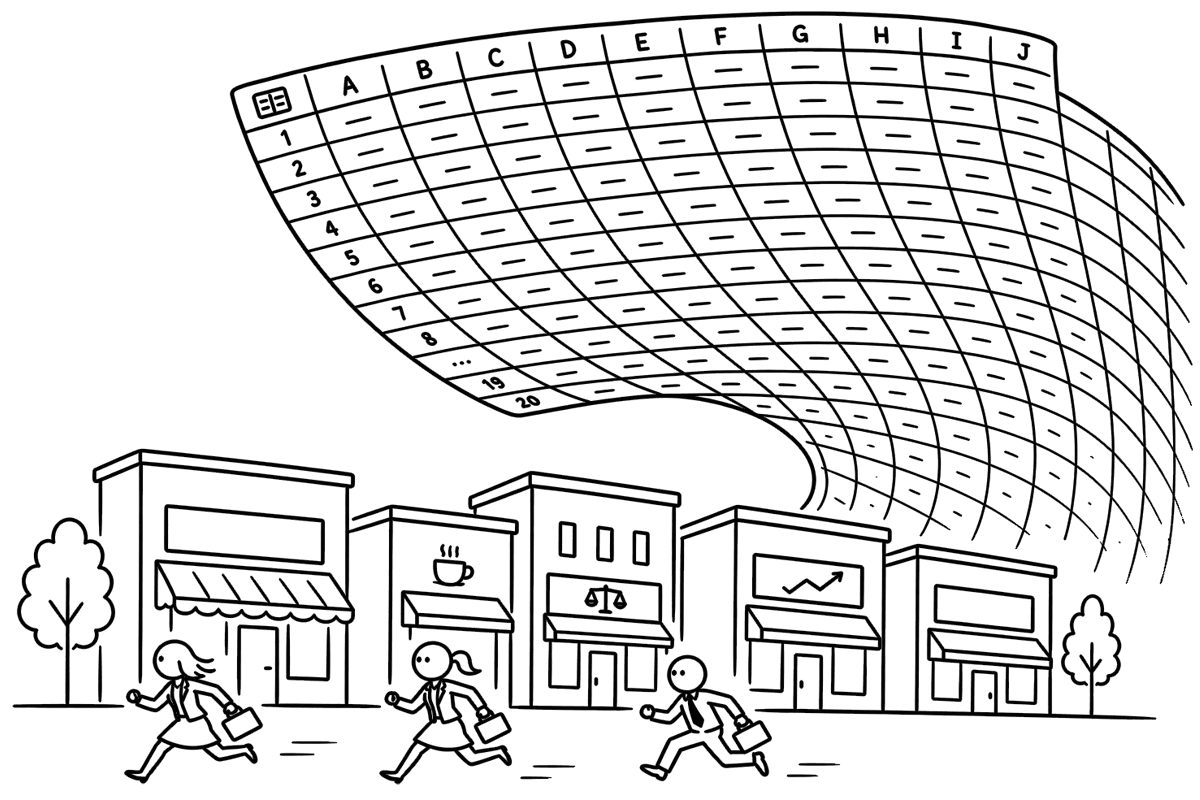
Most tools, like Tableau or Power BI paired with Claude, still produce heavy, IT-centric interfaces that people in HR, Sales, or Marketing Operations simply don't want to use.
They open a giant table full of data, and even if the answer they're looking for is somewhere on that screen, our brains are wired to avoid unnecessary effort. Especially today, when attention is constantly under attack, people naturally check out.
You solve this by becoming obsessed with user interfaces.
Think Apple.
If your solution looks more complicated than something Apple would design, you're probably on the wrong path.
If prospective clients look at your product and say, "Wow, it's beautiful," or "Wow, this feels years ahead of what we have today," you're probably on the right one.
Have you noticed the irony of this post?
I promised you three ingredients for building a successful AI product, but AI is actually the supplement, not the main course.
These principles apply to any great product, whether it uses AI or not.
We know this approach works because of the amount of interest we're getting from companies for our AI-native enterprise back office.
We applied all three principles while building it.
It took us five years of building products, on top of 19 years of consulting, to distill thousands of experiences and data points into a simple product that solves very complicated problems for sophisticated enterprises.
Good luck building your next big thing.