

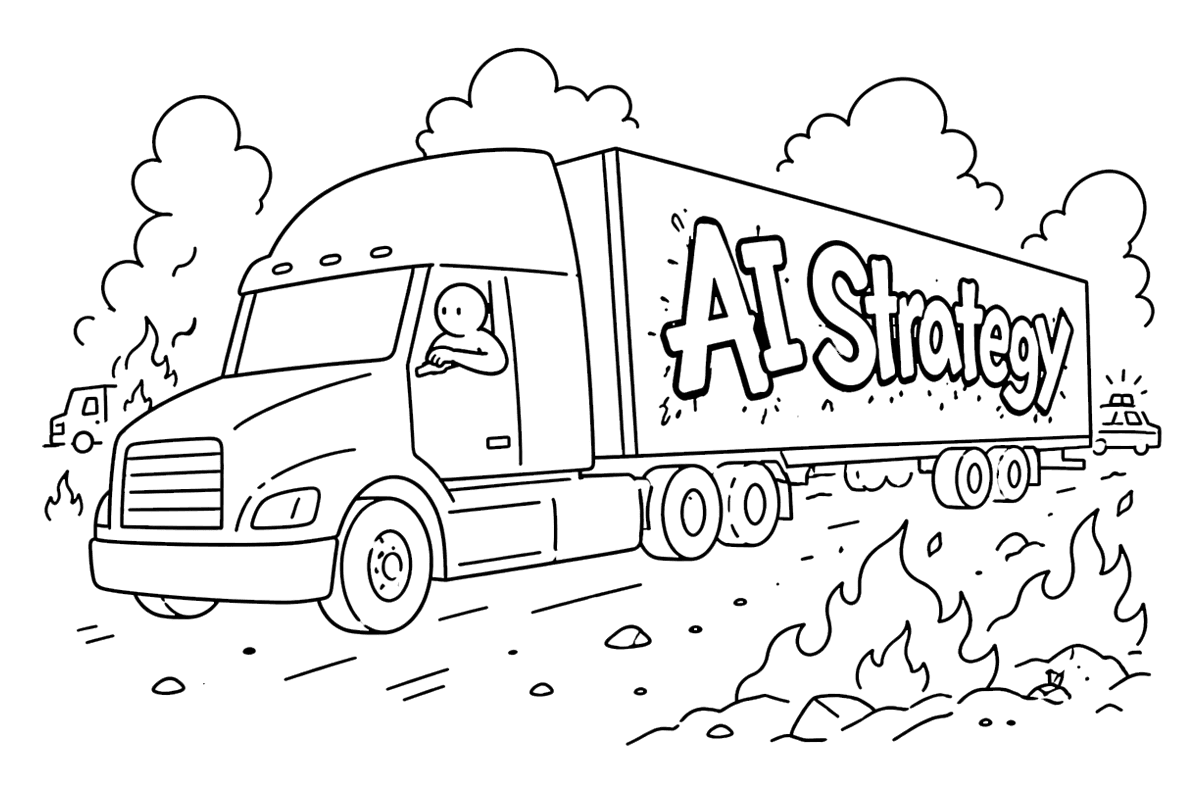
A lot of companies don’t.
But here's what most executives in that position are missing — they're thinking about this as an internal growth problem.
"We'll fall behind competitors."
"We'll be slower to scale."
"Our margins will suffer."
True. But that's not the real threat.
The real threat is your customers.
Right now, a hospital CFO choosing between two medical supply distributors is mostly looking at price, reliability, and relationships. Same as always.
In 18 months?
That same CFO is going to ask:
"Which of these vendors can give me real-time inventory forecasting?"
"Which one flags supply chain disruptions before they happen?"
"Which one sends me automated reorder alerts based on my actual usage patterns?"
They won't frame it as "which vendor uses AI." They'll just expect those capabilities to exist. And when they don't — they'll move.
This is already happening in manufacturing. Procurement managers are quietly starting to score suppliers on operational intelligence.
Can you predict delivery delays?
Can you adapt to demand shifts without a three-week lag?
Can your systems talk to ours?
Healthcare is next. Then logistics. Then every industry that convinced itself it was "too relationship-driven" to be disrupted this way.
The companies that survive this shift aren't necessarily the ones who built the best AI. They're the ones who understood early enough that AI stopped being a competitive advantage and became a baseline expectation.